


This article covers KPIs and their use cases. KPIs are elements that can be leveraged by Customer Success teams to help customers achieve their goals and monitor value over time. They can be added individually to a page like any other item, or displayed in a dashboard on the KPI Overview page.
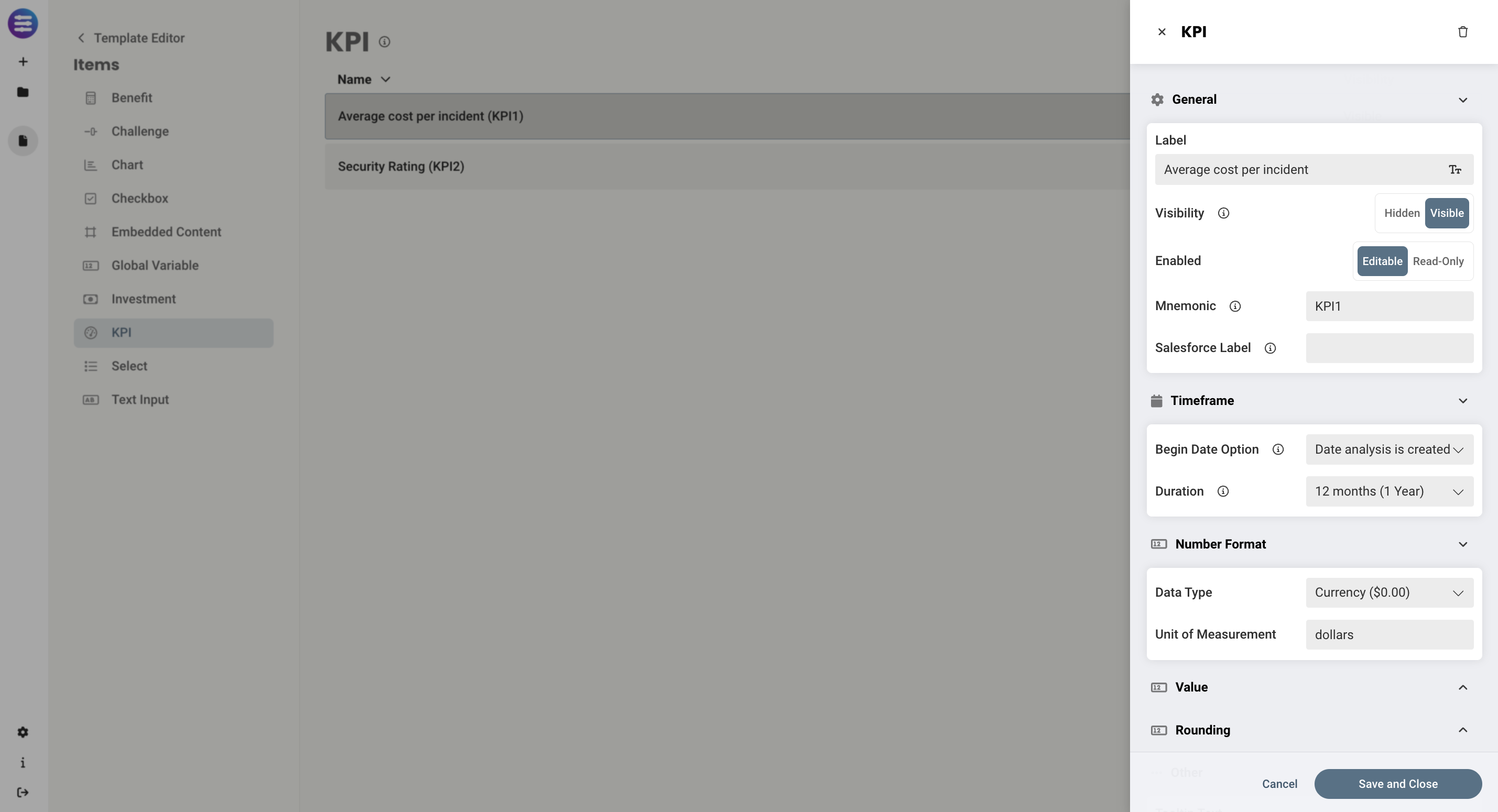
After creating your KPI, set the date at which the KPI begins (Date the Analysis is created, or a specified date), and the duration of time you want it tracked. Typically a specified date is chosen if you are already tracking KPIs in another location and want consistency.
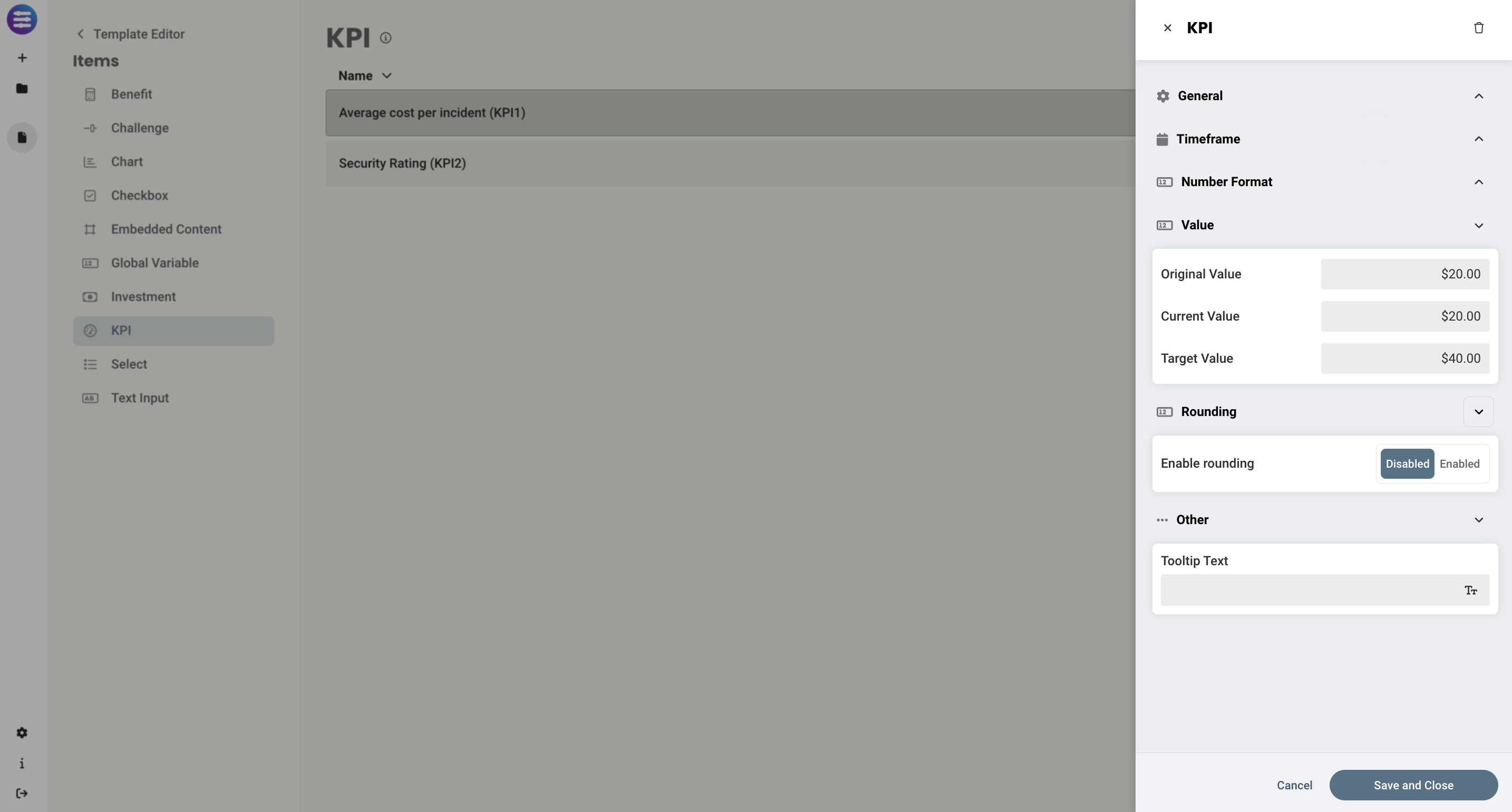
The set the Original, Current, and Target value. These are used to calculate progress to date and graph your KPI on the KPI Overview page.
Once you have created your KPI, it will show up like this, with the ability tto adjust the original, current, and target values, as well as the begin date:

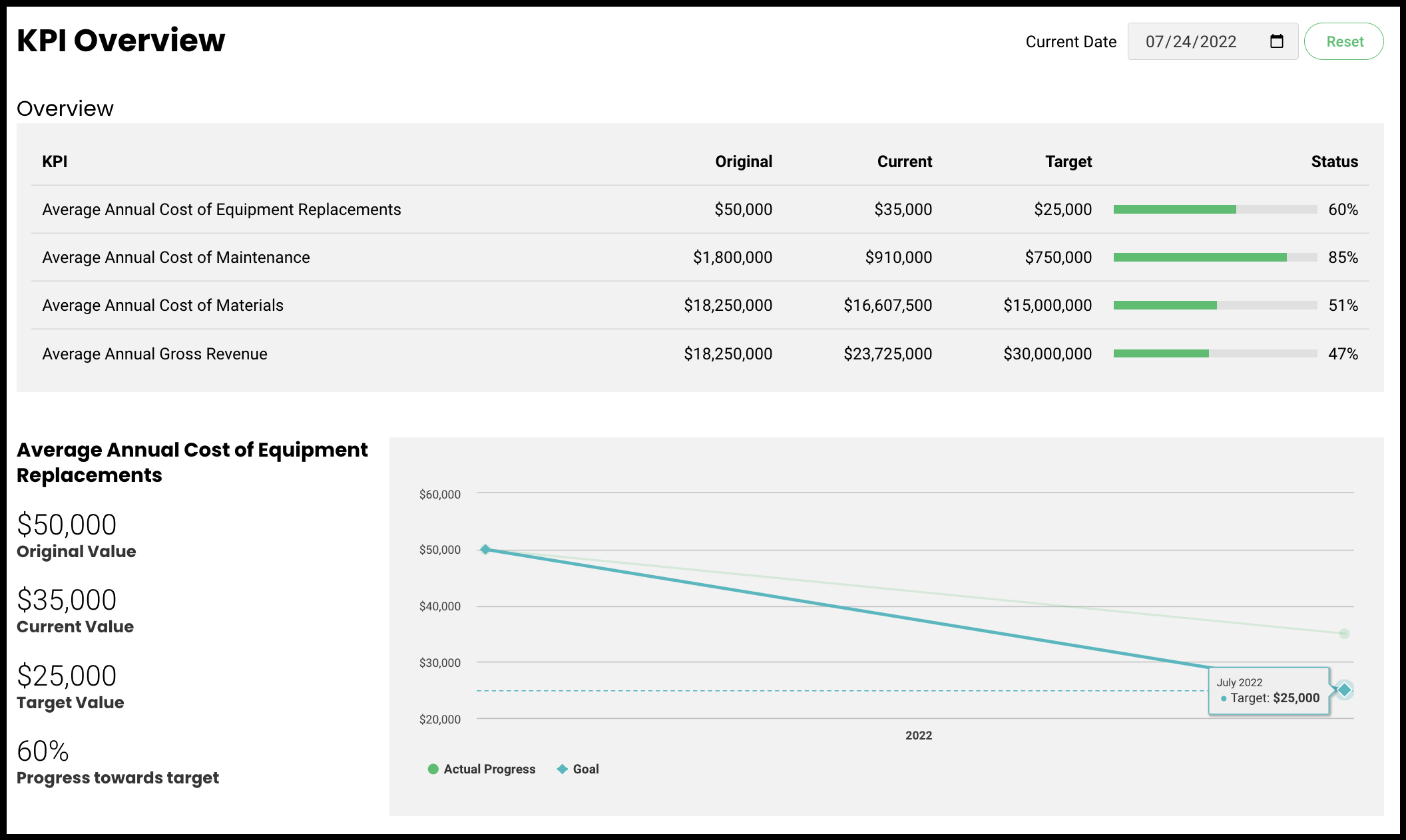
If you decide to add a KPI Overview page, all your KPIs will show up like this, displaying each with it's progress along with a graph:
When editing a KPI, you will have access to the following properties:
Design properties
- Size
- Grid - sets the size of the element based on the number of columns you want it to span across the page. A standard page is made up of 12 columns. So for example, two equal elements placed on a page would each span 6 columns.
- Fixed - set the exact size of the element using pixels or a percentage
- Fit content - makes it so the element expands to fit the content that it contains
- Fill space/available - expands the element to the size of the section it is contained within
- Margins - allows you to space elements out on a page by adjusting the px size of margins. Margins define the bounds outside of an element (pushes content away from it).
- Conditional Visibility - allows you to define what devices each element will be visible on. For example, you may want to hide certain large elements on a mobile device because they take up too much space, or are not as relevant.
Item properties
- Label - give the item a name
- Visibility - set the item to visible or hidden
- Enabled - set the item to Editable or Read-only
- Mnemonic - give the item a mnemonic that can be used in rules and for report tags
- Salesforce label - provide a label that can be used to tie the value to a field in Salesforce (this value will be inherited by the CRM once an Analysis is created from the CRM)
- Begin date option - set whether the KPI should start getting tracked when an analysis is created from this template, or on a specific date
- Duration - length of time to track this KPI after its begin date
- Data type - select number, currency, or percentage
- Unit of measurement - define your unit of measurement using a text field
- Value - enter values for Original, Current, and Target
- Rounding - define whether values will round up or be precise
- Tooltip text - allows you to enter a tooltip that will be available by hovering your cursor over it
Replies have been locked on this page!